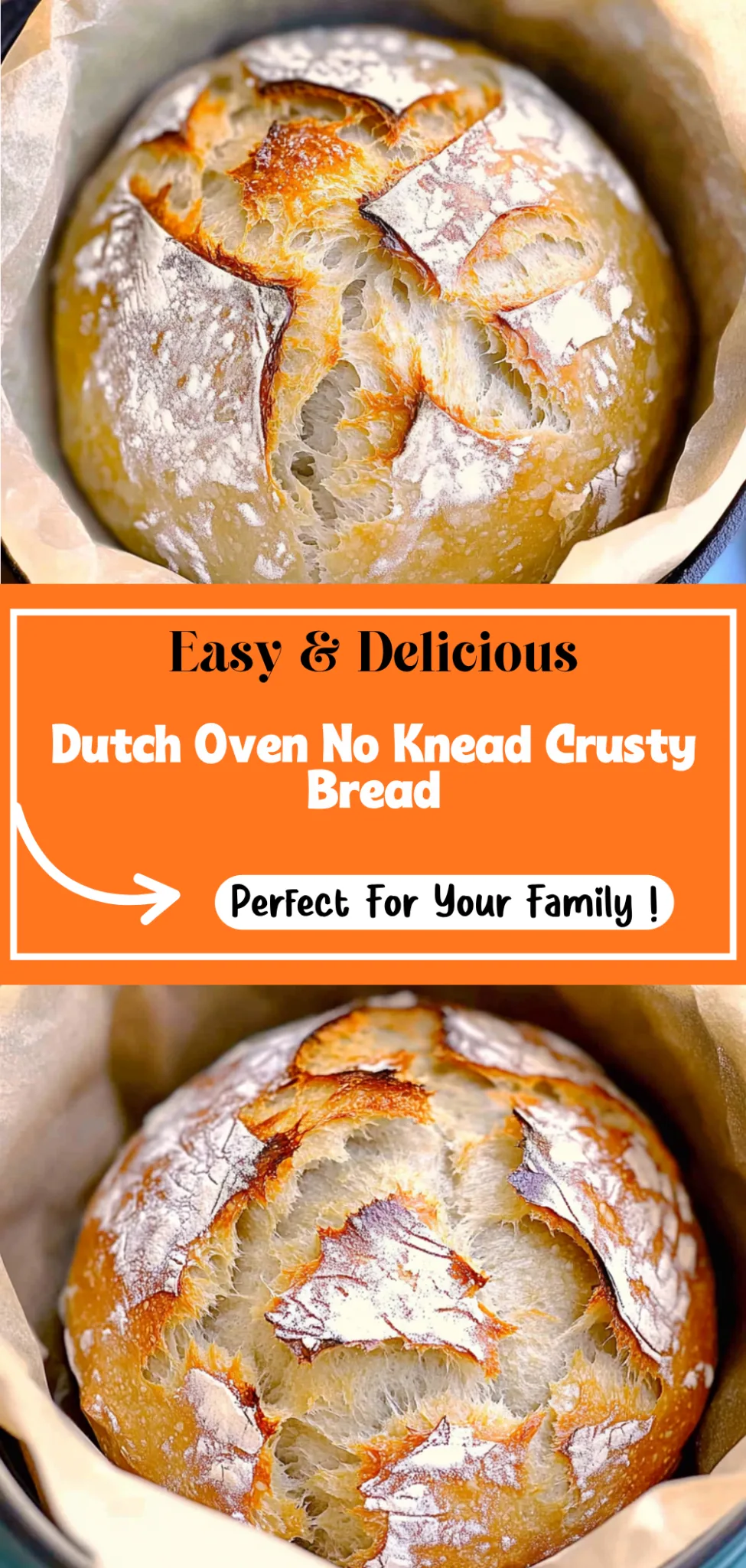
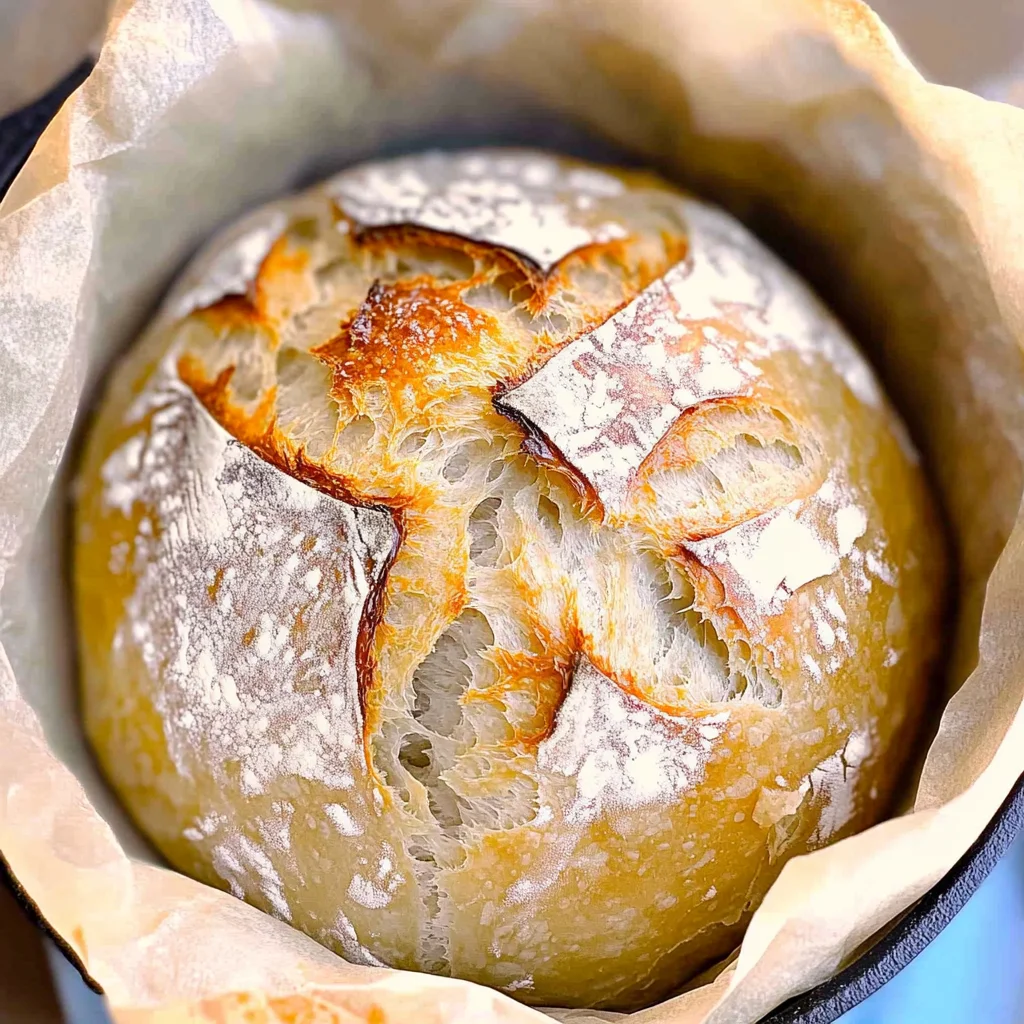
The aroma of freshly baked Dutch Oven No Knead Crusty Bread wafts through the kitchen, enveloping you in a warm embrace. With its golden-brown crust crackling beneath your fingers and a soft, airy interior waiting to be savored, this bread transforms any meal into a comforting experience, perfect for gathering around the table with loved ones or enjoying a quiet evening at home.
What sets this recipe apart is its simplicity; using just a handful of ingredients and no kneading required, it unlocks the secrets of artisanal bread-making right in your own kitchen. The steam trapped in the Dutch oven creates an enviable crust that rivals your favorite bakery’s best offerings. Give this easy yet impressive recipe a try, and let the irresistible scent and taste fill your home with warmth and joy.
Why You’ll Love This Dutch Oven No Knead Crusty Bread
There’s something truly magical about the combination of just three cups of all-purpose flour, a teaspoon of salt, and a pinch of instant yeast coming together to create the ultimate comfort food. This Dutch Oven No Knead Crusty Bread features a beautifully golden-brown crust that crackles as you slice into it, revealing a soft, airy interior that practically melts in your mouth. The simplicity of the ingredients allows the natural flavors to shine through, making each bite rich and satisfying. Plus, the ease of preparation means you can have this delicious bread rising while you go about your day—there’s no need for kneading or fussing over techniques. Trust me, once you experience the aroma wafting through your kitchen as it bakes, you’ll be eager to pull out your Dutch oven and whip up a loaf tonight!
What Kind of Flour Should I Use?
For this Dutch Oven No Knead Crusty Bread, I highly recommend using all-purpose flour. This type of flour strikes the perfect balance between protein content and versatility, allowing for a crusty exterior while maintaining a soft, airy interior. All-purpose flour provides enough structure for the bread to rise well without becoming too dense or chewy. If you decide to use bread flour instead, you may need to adjust the hydration slightly since bread flour has a higher protein content and can absorb more water, leading to a drier dough if not compensated for.
Ingredients for the Dutch Oven No Knead Crusty Bread
Each ingredient in this dish plays an essential role in flavor and texture. Here’s what you’ll need:
- 3 cups all-purpose flour: Provides structure and a chewy, satisfying crumb.
- 1 teaspoon salt: Enhances flavor and strengthens the dough.
- 1 teaspoon instant yeast: Helps the bread rise for a light, airy texture.
- 1.5 cups water (room temperature): Hydrates the flour to create a perfect dough consistency.
Step-by-Step: How to Make Dutch Oven No Knead Crusty Bread
Combine the Dry Ingredients
In a large mixing bowl, combine 3 cups of all-purpose flour, 1 teaspoon of salt, and 1 teaspoon of instant yeast. Stir the dry ingredients together until they are evenly mixed, ensuring that the yeast and salt are well distributed throughout the flour.
Mix in the Water
Add 1.5 cups of room temperature water to the dry ingredients. Use a wooden spoon or spatula to stir until a shaggy dough forms; it should be sticky and somewhat lumpy. Don’t worry if it’s not perfectly smooth—this is how no-knead bread is meant to be!
Allow for the First Rise
Cover the bowl with a kitchen towel and let it rest at room temperature for 12 to 18 hours. During this time, the dough will rise and develop bubbles on the surface, indicating fermentation. Aim for a warm spot in your kitchen so that it can rise effectively.
Turn Out the Dough
After the first rise, turn the dough out onto a generously floured surface. This helps to prevent sticking as you handle it. You’ll notice that it has expanded significantly and may have large bubbles forming throughout.
Shape into a Ball
With floured hands, gently shape the dough into a ball by tucking the edges towards the center. Be careful not to deflate it too much; you want to maintain some of those air pockets that have formed during rising. Once shaped, place it on a piece of parchment paper.
Preheat Your Dutch Oven
About 30 minutes before you plan to bake, place your empty Dutch oven in the oven and preheat to 450°F (232°C). This step is crucial as it creates an ideal environment for baking crusty bread with a beautifully browned exterior.
Transfer Dough to Dutch Oven
Once preheated, carefully remove the hot Dutch oven from the oven using oven mitts. Lift the parchment paper with your shaped dough and lower it into the Dutch oven gently. The hot pot will create steam around the bread while baking, which is essential for achieving that crusty exterior.
Bake Covered for Initial Cooking
Cover the Dutch oven with its lid and bake for 30 minutes. This initial covered baking helps trap moisture, allowing your bread to rise and develop a tender crumb inside while staying moist on top.
Finish Baking Uncovered
After 30 minutes, carefully remove the lid from your Dutch oven. Bake for an additional 15 minutes until the bread is deeply golden brown and has formed a hard crust. Keep an eye on it toward the end to ensure it doesn’t burn; you’re looking for that perfect golden hue.
Cool Before Slicing
Remove your freshly baked bread from the Dutch oven and let it cool on a wire rack for at least 30 minutes before slicing. This cooling period allows steam to escape and sets up that lovely soft interior texture you’re aiming for—resist slicing too soon!
How to Serve and Store Dutch Oven No Knead Crusty Bread
This recipe yields four servings of delightful Dutch Oven No Knead Crusty Bread, perfect for sharing with family or friends. Serve it warm alongside a hearty soup or stew, allowing the crusty exterior to soak up delicious broths. Alternatively, slice it thick and pair it with a selection of cheeses and charcuterie for an inviting appetizer platter that invites conversation.
To store leftovers, wrap the bread tightly in plastic wrap or place it in an airtight container to keep it fresh for up to three days in the fridge. When reheating, simply warm it in the oven at 350°F (175°C) for about 10 minutes to restore its crispy crust without compromising its airy interior. While this bread is best enjoyed fresh, you can freeze any extra slices; just be aware that the texture may soften slightly upon thawing.
What to Serve With Dutch Oven No Knead Crusty Bread
Creamy Polenta
Rich and velvety polenta provides a delightful contrast to the crusty bread, making each bite a comforting experience.
Roasted Garlic Brussels Sprouts
The caramelized sweetness of roasted Brussels sprouts complements the bread’s crust, creating a flavorful balance.
Tomato Basil Salad
Fresh and zesty, a tomato basil salad brightens up the meal while the bread perfectly sops up the dressing.
Savory Mushroom Risotto
This creamy mushroom risotto enhances the bread’s texture, offering a luxurious pairing that’s rich in umami flavor.
Spinach and Feta Stuffed Peppers
Stuffed peppers filled with spinach and feta provide a hearty yet fresh option that harmonizes beautifully with the bread’s airy interior.
Herb Butter Garlic Naan
Adding a twist, garlic naan brushed with herb butter serves as an excellent vessel for mopping up sauces alongside your crusty bread.
Frequently Asked Questions
Can I use whole wheat flour instead of all-purpose flour? Whole wheat flour can be used, but it may result in a denser bread. If you choose to substitute, consider using a combination of whole wheat and all-purpose flour to maintain a lighter texture.
Is this recipe suitable for a gluten-free diet? Unfortunately, this specific recipe is not gluten-free as it relies on all-purpose flour. However, you can experiment with gluten-free flour blends designed for baking; just be sure to follow any additional instructions that come with those blends.
Can I freeze the bread after baking? Yes, you can freeze the bread once it has cooled completely. Wrap it tightly in plastic wrap or aluminum foil and store it in an airtight container for up to three months. When ready to eat, let it thaw at room temperature or warm it in the oven.
How do I know when the bread is fully baked? The bread is done when it’s golden brown on the outside and sounds hollow when tapped on the bottom. Additionally, using an instant-read thermometer can help; the internal temperature should reach about 200°F (93°C).
Can I add herbs or spices to this bread recipe? Absolutely! You can mix in dried herbs like rosemary or thyme, or even spices like garlic powder or onion powder into the dry ingredients for added flavor. Just keep in mind that too many additions might affect the dough’s hydration levels.
Final Thoughts
There’s nothing quite like pulling a loaf of Dutch Oven No Knead Crusty Bread from the oven, with its golden crust and tender interior—it’s a delightful way to elevate any meal. For more comforting recipes, try pairing it with [Savory Garlic Butter Shrimp] or [Hearty Vegetable Soup] for a cozy dining experience. We’d love for you to save this recipe on Pinterest and share your baking adventures with us in the comments!
Dutch Oven No Knead Crusty Bread
Ingredients
Method
- In a large mixing bowl, combine the flour, salt, and instant yeast.
- Add the water and stir until a shaggy dough forms.
- Cover the bowl with a kitchen towel and let it rest at room temperature for 12-18 hours.
- After the dough has risen, turn it out onto a floured surface.
- With floured hands, shape the dough into a ball and place it on a piece of parchment paper.
- About 30 minutes before baking, place the Dutch oven in the oven and preheat to 450°F (232°C).
- Carefully remove the hot Dutch oven from the oven.
- Lift the parchment paper with the dough and place it into the Dutch oven.
- Cover with the lid and bake for 30 minutes.
- Remove the lid and bake for an additional 15 minutes until golden brown.
- Remove the bread from the Dutch oven and let it cool on a wire rack for at least 30 minutes before slicing.


Leave a Comment