The aroma of Rosemary & Roasted Garlic Artisan Bread wafts through the kitchen, inviting you to indulge in its golden-brown crust and tender, airy interior. Each slice reveals a delicate balance of savory garlic and earthy rosemary, creating a comforting embrace that transforms any meal into a special occasion, whether it’s a cozy family dinner or an elegant gathering with friends.
What sets this artisan bread apart is the meticulous process of roasting the garlic until it caramelizes, enhancing its natural sweetness and depth. Paired with freshly chopped rosemary, this bread becomes not just a side but a star on your table, perfect for dipping in olive oil or savoring with hearty soups. Let this warm loaf become a cherished addition to your culinary repertoire, inviting warmth and connection to every sharing moment.
Why You’ll Love This Rosemary & Roasted Garlic Artisan Bread
This Rosemary & Roasted Garlic Artisan Bread is not just a side dish; it’s a sensory experience that elevates any meal. The combination of roasted garlic and fresh rosemary creates a fragrant aroma that will fill your kitchen, while the rich olive oil adds a buttery depth to the dough, ensuring each bite is moist and flavorful. With its beautifully crisp crust and soft, airy interior—thanks to the perfect balance of warm water and yeast activation—this bread strikes a delightful contrast in texture that you’ll crave. It’s incredibly easy to make, making it an ideal choice for both novice bakers and seasoned pros alike. So why wait? Get ready to impress your family and friends with this artisanal delight tonight!
What Kind of Flour Should I Use?
For this Rosemary & Roasted Garlic Artisan Bread, all-purpose flour is the best choice. This type of flour has a moderate protein content that provides the right balance between structure and tenderness, allowing the bread to rise beautifully while still achieving a soft, chewy texture. If you prefer a more robust flavor, you can opt for bread flour, which has a higher protein level and will yield a slightly denser loaf; just be aware that it may require a bit more water to achieve the same dough consistency. However, if you stick with all-purpose flour, you’re guaranteed a delightful artisan bread that highlights the flavors of roasted garlic and fresh rosemary perfectly.
Ingredients for the Rosemary & Roasted Garlic Artisan Bread
Each ingredient in this dish plays an essential role in flavor and texture. Here’s what you’ll need:
- 3 cups all-purpose flour (plus extra for dusting): Provides structure and a soft crumb for the bread.
- 1 cup warm water (about 110°F): Activates the yeast and hydrates the dough for proper rise.
- 2 teaspoons active dry yeast (or instant yeast): Essential for fermentation, giving the bread its lightness and airy texture.
- 1 teaspoon sugar: Fuels the yeast activity, enhancing the bread’s flavor and rise.
- 1 teaspoon salt: Balances flavors and strengthens the dough, ensuring a tasty loaf.
- 2 tablespoons olive oil: Adds richness and moisture, contributing to a tender bite.
- 1 head garlic (roasted): Infuses the bread with a sweet, mellow garlic flavor that’s irresistible.
- 2 tablespoons fresh rosemary (chopped): Offers a fragrant herbal note that complements the garlic beautifully.
Step-by-Step: How to Make Rosemary & Roasted Garlic Artisan Bread
Activate the Yeast
In a mixing bowl, combine 1 cup of warm water, 1 teaspoon of sugar, and 2 teaspoons of active dry yeast. Allow this mixture to sit for about 5 minutes until it becomes frothy, indicating that the yeast is activated and ready to work its magic in your dough.
Combine Ingredients
Next, add 3 cups of all-purpose flour, 1 teaspoon of salt, and 2 tablespoons of olive oil to the yeast mixture. Stir everything together until a rough dough forms; it should be slightly sticky but manageable. If necessary, sprinkle a little extra flour as needed to help bring the dough together.
Knead the Dough
Transfer the dough onto a floured surface and begin kneading it for approximately 10 minutes. As you knead, apply consistent pressure with your palms, folding and pushing the dough until it becomes smooth and elastic. A well-kneaded dough should spring back when you press it gently with your finger.
Incorporate Flavorings
Once your dough is ready, fold in the roasted garlic and 2 tablespoons of chopped fresh rosemary. Ensure that these flavorings are evenly distributed throughout the dough for a delightful taste in every bite. The aroma will be tantalizing as you incorporate these ingredients.
First Rise
Place the dough in a greased bowl and cover it with a kitchen towel. Set it in a warm area to rise for about 1 hour or until it has doubled in size. This step is crucial for developing the bread’s texture; look for a puffy appearance before moving on.
Shape the Loaf
After the first rise, gently punch down the dough to release any air bubbles. Shape it into a round loaf by tucking edges under to form a smooth top. Place this formed loaf on a baking sheet lined with parchment paper; this will prevent sticking and make for an easy transfer later.
Second Rise
Cover the shaped loaf with another kitchen towel and let it rise for an additional 30 minutes. During this time, the dough will puff up again; keep an eye out for noticeable volume increase as an indicator that it’s ready for baking.
Preheat and Bake
Preheat your oven to 425°F (220°C) while your loaf finishes its second rise. Bake the bread for 30-40 minutes until it turns golden brown and sounds hollow when tapped on the bottom—a sure sign that it’s done. The crust should be firm yet lightly crisped.
Cool Before Slicing
Once baked, remove the bread from the oven and transfer it to a wire rack to cool completely before slicing. This cooling stage is essential as it helps set the crumb structure inside; slicing too soon may result in gummy bread. Enjoy your deliciously aromatic artisan bread!
How to Serve and Store Rosemary & Roasted Garlic Artisan Bread
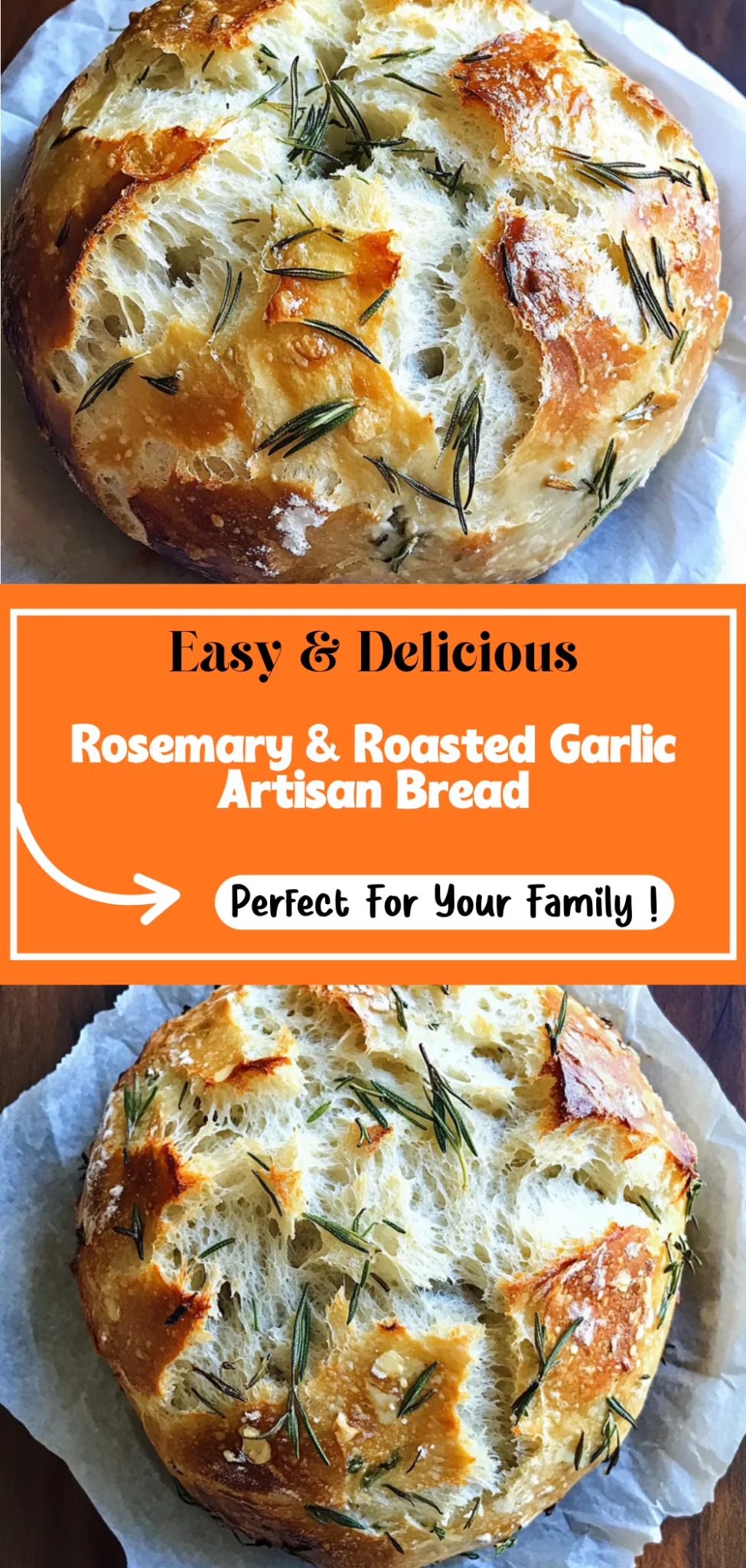
This delightful Rosemary & Roasted Garlic Artisan Bread yields 4 servings, making it perfect for sharing at your next meal. Enjoy it warm, sliced and served alongside a rich bowl of tomato basil soup, or simply spread with creamy butter or a drizzle of olive oil for an elegant appetizer. The fragrant rosemary and roasted garlic will elevate any dish, whether you’re pairing it with a hearty stew or enjoying it as part of a charcuterie board.
To store leftovers, keep the bread in an airtight container at room temperature for up to 2 days; after that, it’s best to refrigerate to maintain freshness. When reheating, wrap slices in aluminum foil and place them in a preheated oven at 350°F for about 10-15 minutes, which helps retain moisture and ensures the crust stays crisp. While this bread is best enjoyed fresh, it can be frozen for up to a month; just be aware that the texture may become slightly denser upon thawing.
Creamy Polenta
Rich and creamy polenta provides a smooth, velvety contrast to the hearty texture of the artisan bread while complementing its roasted garlic flavor.
Roasted Brussels Sprouts
The caramelized sweetness of roasted Brussels sprouts enhances the herbal notes of rosemary in the bread, creating a delightful balance of flavors.
Caprese Salad
A fresh Caprese salad with ripe tomatoes, mozzarella, and basil adds a refreshing acidity that beautifully offsets the richness of the roasted garlic.
Garlic Herb Butter Noodles
Tender noodles tossed in garlic herb butter are an indulgent pairing that allows for delightful sauce absorption, enhancing each bite of bread.
Creamy Spinach Gratin
This decadent spinach gratin offers a luscious creaminess that pairs wonderfully with the rustic crust of the artisan bread, perfect for scooping.
Tomato Basil Bruschetta
The bright and zesty tomato basil bruschetta serves as a vibrant topping that contrasts nicely with the savory notes of roasted garlic in the bread.
Frequently Asked Questions
Can I use whole wheat flour instead of all-purpose flour?
Yes, you can substitute whole wheat flour for all-purpose flour, but the texture may be denser. It’s best to start with a 50/50 blend of whole wheat and all-purpose flour to maintain a good balance.
Is this recipe gluten-free?
Unfortunately, this recipe is not gluten-free as it contains all-purpose flour. For a gluten-free version, consider using a gluten-free all-purpose flour blend that includes xanthan gum for structure.
Can I make the dough ahead of time and freeze it?
Absolutely! You can freeze the shaped dough after the second rise. Just wrap it tightly in plastic wrap and store it in an airtight container. When ready to bake, thaw it in the refrigerator overnight and let it come to room temperature before baking.
How do I know when the bread is done baking?
The bread is done when it’s golden brown and sounds hollow when tapped on the bottom. It should also have risen well during baking; if you’re unsure, you can check its internal temperature, which should be around 190°F (88°C).
What other herbs can I use in this recipe?
Feel free to experiment with different herbs! Thyme, oregano, or basil can make great flavor additions. Just remember to chop them finely and adjust the quantity based on your taste preference.
Can I bake this bread in a Dutch oven instead of on a baking sheet?
Yes, using a Dutch oven can create a steam environment that helps achieve a crusty exterior. Preheat the Dutch oven while your dough rises, then carefully place the shaped dough inside before covering and baking as directed.
Final Thoughts
There’s nothing quite like the comforting aroma and rich flavor of Rosemary & Roasted Garlic Artisan Bread to elevate any meal and impress your loved ones. For a delightful spread, consider trying [Herb-Infused Olive Oil], [Roasted Vegetable Bruschetta], or [Creamy Spinach Artichoke Dip] to pair alongside this delicious bread. We’d love for you to share your baking adventures with us on Pinterest, and don’t forget to let us know how your bread turned out in the comments!


Leave a Comment